
What is Āyurveda?
The science of life. A medicine that starts with who you are, not with the symptoms you have.
What is Ayurveda: a medicine more than five thousand years old
Āyurveda is one of the oldest medical systems in the world. Originating in India, its name comes from Sanskrit: Āyurmeans life and Veda means knowledge.
Āyurveda can be translated as "the science or knowledge of life".
This system is rooted in a deep understanding of human nature: health arises from the balance between body, mind and environment.
Unlike approaches focused exclusively on symptoms, Āyurveda regards each person as a unique, dynamic system.
A vision of health that goes beyond the body
In Āyurveda, wellbeing is not limited to the physical state. Health is understood as a balance that integrates:
When these factors are in balance, the body maintains its natural capacity for regeneration.
When they become disrupted, signs of imbalance appear which, if they persist, can give rise to different disorders.
This is why Āyurveda places special emphasis on prevention and on understanding one's own nature.
The five elements
The Āyurvedic tradition describes nature through five fundamental elements: ether, air, fire, water and earth. These elements are present both in the environment and in the human body, combining in different ways to give rise to the principles that govern the organism.
From these combinations arise the doshas — the biological forces responsible for each person's physiological and psychological processes.
The three doshas
Vata

Formed by the elements air and ether, Vata represents the principle of movement.
It governs breathing, circulation, the activity of the nervous system and the body's mobility.

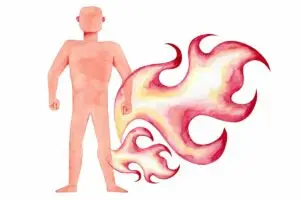
Pitta

Associated with fire and water, Pitta represents the principle of transformation.
It is related to digestion, metabolism and the processes that generate energy in the body.
Kapha

Composed of water and earth, Kapha represents stability, structure and nourishment.
It is related to physical resilience, the lubrication of tissues and emotional stability.

Your individual constitution: the Prakriti
In Āyurveda, each person has a unique constitution known as Prakriti — formed by the particular combination of the three doshas at the moment of birth. In most people, one or two doshas predominate, influencing aspects such as:
Understanding your Prakriti makes it possible to tailor diet, daily routines and therapies in a personalised way. Not as a generic protocol — but as a plan built from your own nature.
How Āyurveda works
Āyurveda uses different tools to restore the body's balance:
These practices aim to restore the balance of the doshas and strengthen the body's natural capacity to stay healthy.
Āyurveda and prevention
One of the most valuable aspects of Āyurveda is its preventive approach.
By understanding each person's individual nature and tendencies, it is possible to adopt habits that support balance before deeper imbalances appear.
This approach makes it possible to develop a more conscious relationship with diet, rest, activity and self-care.
The first step is knowing yourself
At Tejas Āyurveda we offer individual Āyurvedic consultations in the Alt Empordà, Girona, and online. Narayan Yadav, graduate in Āyurveda (BAMS), analyses your constitution and designs a personalised plan for you.
Book a consultation— 64€ How the consultation works